

Does your room feel chilly only after midnight, or is it cold enough that you sleep in socks? That one question decides the best blanket for winter far more than brand or price. A blanket that is perfect in a Pune flat will leave you shivering in a Lucknow bedroom in January.
This guide walks you through the main types of blankets, what the GSM number on the label really tells you, and which piece to buy for four levels of cold.
Types of Blankets for Winter, Compared
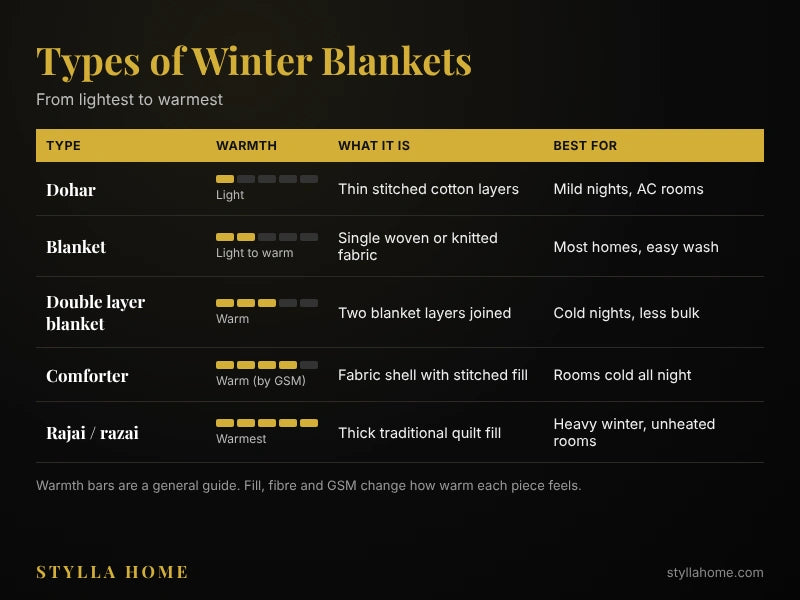
Indian homes use five main kinds of winter cover. Here is how they differ:
| Type | What it is | Warmth | Best for |
|---|---|---|---|
| Dohar | Thin layers of cotton fabric stitched together, often with a soft muslin face | Light | Mild winter nights, AC rooms, layering |
| Blanket | A single woven or knitted fabric (mink, fleece, wool, cotton) | Light to warm | Most homes, easy to wash |
| Double layer blanket | Two blanket layers joined into one, often two-ply mink or fleece | Warm | Cold nights without the bulk of a rajai |
| Comforter | Fabric shell filled with fibre, stitched so the fill stays in place | Warm, rated by GSM | Bedrooms that stay cold all night |
| Rajai / razai (quilt) | A traditional Indian quilt with a thick fill, often cotton or fibre | Warmest | Heavy winter, unheated rooms |
The types of blankets for winter you need depend less on the name and more on fill, thickness and how many layers you can add.
What GSM Tells You, and What It Does Not
GSM stands for grams per square metre. It tells you how heavy one square metre of the fabric or fill is. Creswick Wool, a blanket maker, explains that a higher GSM means a denser fabric, but not necessarily a warmer one, because the fibre itself matters too.
Fill and structure matter just as much. A lofty, fluffy fill traps still air between fibres, and trapped air is what keeps you warm. A flat, dense fabric of the same GSM can feel cooler. Bedsure's guide on why GSM alone cannot tell you how warm a blanket is also points to even fill distribution: stitched comforters keep the fill from shifting into cold spots after washing.
As a rough guide, bedding makers use these ranges:
| GSM | Feel | Use |
|---|---|---|
| 150 to 250 | Light | Mild nights, layering |
| 250 to 350 | Medium | Cool nights |
| 350 to 450 | Warm | Cold nights |
| 450 and above | Heavy | Very cold rooms or as a base layer |
So compare GSM between two similar products (two fibre comforters, for example), not between a comforter and a mink blanket.
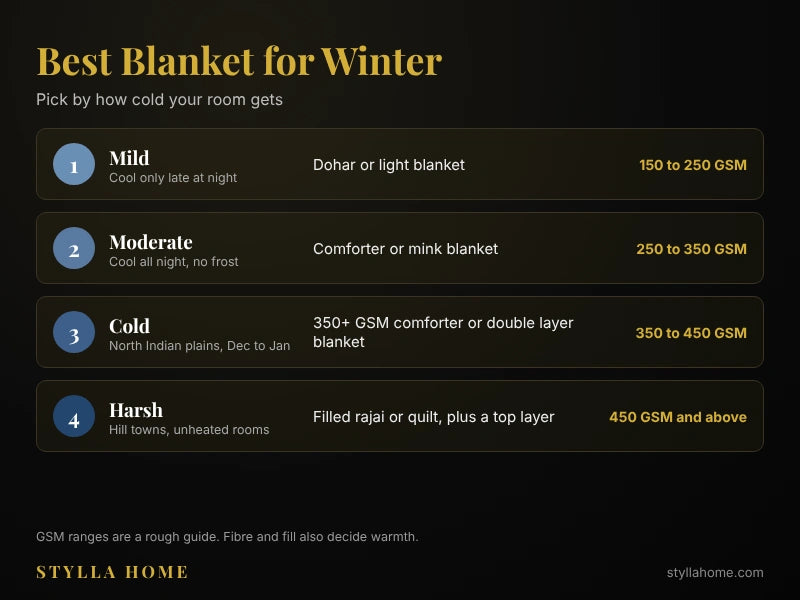
Best Blanket for Winter by Cold Level: 4 Situations
1. Mild winter: cool only late at night
Coastal and southern cities, or flats that stay warm. A dohar or a light blanket around 150 to 250 GSM is plenty. Anything heavier will make you kick it off by 3 am.
2. Moderate winter: cool all night, no frost
Many central Indian cities and well-insulated North Indian homes. A 250 to 350 GSM comforter or a good mink or fleece blanket works. Stylla Home's Star Comforter 200 GSM, a 230 x 250 cm double bed comforter, sits at the lighter end of this level.
3. Cold winter: North Indian plains in December and January
This is where heavy winter blankets earn their place. Choose a comforter of 350 GSM or more, a double layer blanket for heavy winter, or a filled quilt. For couples, heavy winter blankets double bed sizes matter: Stylla Home's double bed blankets and quilts are listed at 230 x 250 cm, which covers a 6 x 6.5 feet bed with room to tuck. Stylla's Star Comforter range also has a 350 GSM version labelled "For Winters".
4. Harsh winter: hill towns and unheated rooms
Here a rajai for heavy winter is still the most reliable choice. A well-filled razai for heavy winter traps far more air than a single blanket. Look for:
- A double bed quilt for heavy winter of about 230 x 250 cm if two people share the bed, so nobody wakes up uncovered
- A single bed quilt for heavy winter for kids' rooms and guest beds; single blankets like Stylla's Hibiki are listed at 160 x 240 cm
- Even stitching across the quilt, so the fill does not bunch up after a few washes
On the coldest nights, layer a blanket over the quilt rather than buying a single extremely heavy piece you will use for only two weeks a year.
Frequently Asked Questions
Which blanket is best for winter in India? For most homes in the North Indian plains, a 350 GSM or heavier comforter, a double layer blanket, or a filled rajai works best. In milder cities, a 250 to 350 GSM comforter or a mink blanket is enough.
Is a rajai warmer than a blanket? Usually yes, because a rajai has a thick fill that traps air, while a blanket is a single fabric layer. A double layer blanket narrows the gap but rarely matches a well-filled rajai.
What is a double layer blanket? It is two blanket layers joined into one piece, often two-ply mink or fleece. It is warmer than a single layer but lighter and easier to wash than a quilt.
Is a higher GSM blanket always warmer? Not always. GSM measures weight per square metre. Fibre type and how much air the fill traps matter just as much, so compare GSM only between similar products.
What size blanket do I need for a double bed? For a 6 x 6 or 6 x 6.5 feet double or king bed, a blanket or quilt of about 230 x 250 cm gives enough overhang on both sides.
Can I wash a winter quilt at home? Check the care label first. Many filled quilts and comforters, including Stylla's winter quilts, recommend dry cleaning, while most blankets can go in a cold machine wash.
Layering: How Indian Homes Handle the Coldest Week
You do not need the heaviest blanket for heavy winter every night of the season. A layered bed adapts better:
- Base: a 300 TC cotton bedsheet. If you are unsure what TC means, see our bed sheet thread count guide.
- Middle: a comforter or quilt sized for your bed.
- Top, only when needed: a blanket or dohar you can pull up on the coldest nights and fold away when the weather turns.
This way one winter season blanket plus one quilt covers you from November to February, instead of three pieces fighting for cupboard space.
Care Tips So Your Winter Bedding Lasts
- Air quilts and comforters in mild sunlight before the season starts, and again before storing them.
- Follow the label: many quilts and comforters say dry clean only, do not iron and dry in shade, while blankets usually allow a cold machine wash.
- Store them dry, in breathable cotton bags rather than sealed plastic, so trapped moisture does not cause smells.
Pick the Right Piece for Your Bed
Match your cold level to the right fill: browse Stylla's winter quilts like the sherpa-lined Waves Winter Quilt for harsh nights, the comforter collection for cold bedrooms, and blankets for lighter layering. Check each listing's size and care details before you order.
Disclaimer
The GSM ranges and cold levels in this guide are general guidance. How warm a piece feels also depends on fibre, fill, room insulation and how warm you sleep. Check each product's listing for its exact size, material and care instructions.
Featured image: Best blanket for winter guide from Stylla Home. Image created with AI assistance.
